Connected lighting and heating are among the most impactful categories in home automation — both in terms of tangible results (comfort, energy use) and in terms of the data they generate about the people living in a home. This article covers how scheduling and automation work in practice, what Canadian heating system types are compatible with smart controls, and what the privacy implications look like under Canadian law.
Automated Lighting: Schedules, Presence, and Scenes
There are three main approaches to automating lights in a home: fixed time schedules, presence-based triggers, and scene-based control. Each works differently and suits different situations.
Fixed Time Schedules
Scheduling lights to turn on and off at set times is the simplest form of automation and requires only a smart bulb or smart switch with a basic app. The limitation is obvious: a schedule set for 7 PM in January will fire in full daylight in July, and it does not adapt to occupancy. Schedules based on local sunrise and sunset times (which all major smart home platforms support) are more practical for exterior and area lighting.
Presence-Based Control
Motion sensors (PIR-based) and occupancy sensors can trigger lights when someone enters a room and turn them off after a period of inactivity. This approach is well-suited to hallways, bathrooms, and utility rooms where switching on a light manually is a minor but repetitive task. The challenge is calibrating the timeout period correctly — too short and lights extinguish on a person sitting still; too long and the energy savings are reduced.
A more sophisticated version of presence-based control uses the GPS location of household mobile phones to determine whether anyone is home at all, triggering a whole-home away mode. This requires that residents consent to location tracking by the smart home app, which raises the privacy considerations discussed later in this article.
Scene-Based Control
Scenes are saved configurations of multiple lights — brightness level and colour temperature for each — that can be activated with a single command. A common arrangement is a "morning" scene with cool white at high brightness, an "evening" scene with warm white at medium brightness, and a "sleep" scene with very dim warm light. Scenes can be triggered by time, by voice assistant, by a physical button, or by conditions within an automation rule.
Smart Heating in Canadian Homes
Canada has a significantly higher proportion of baseboard electric heating than most other developed countries, particularly in Quebec (due to historically low Hydro-Québec rates) and in older rental properties. Smart thermostats designed primarily for forced-air systems — which require a common (C) wire for power — are not compatible with high-voltage electric baseboards (240V, 2-wire). This distinction is important and frequently misunderstood.

Forced-Air (Furnace) Systems
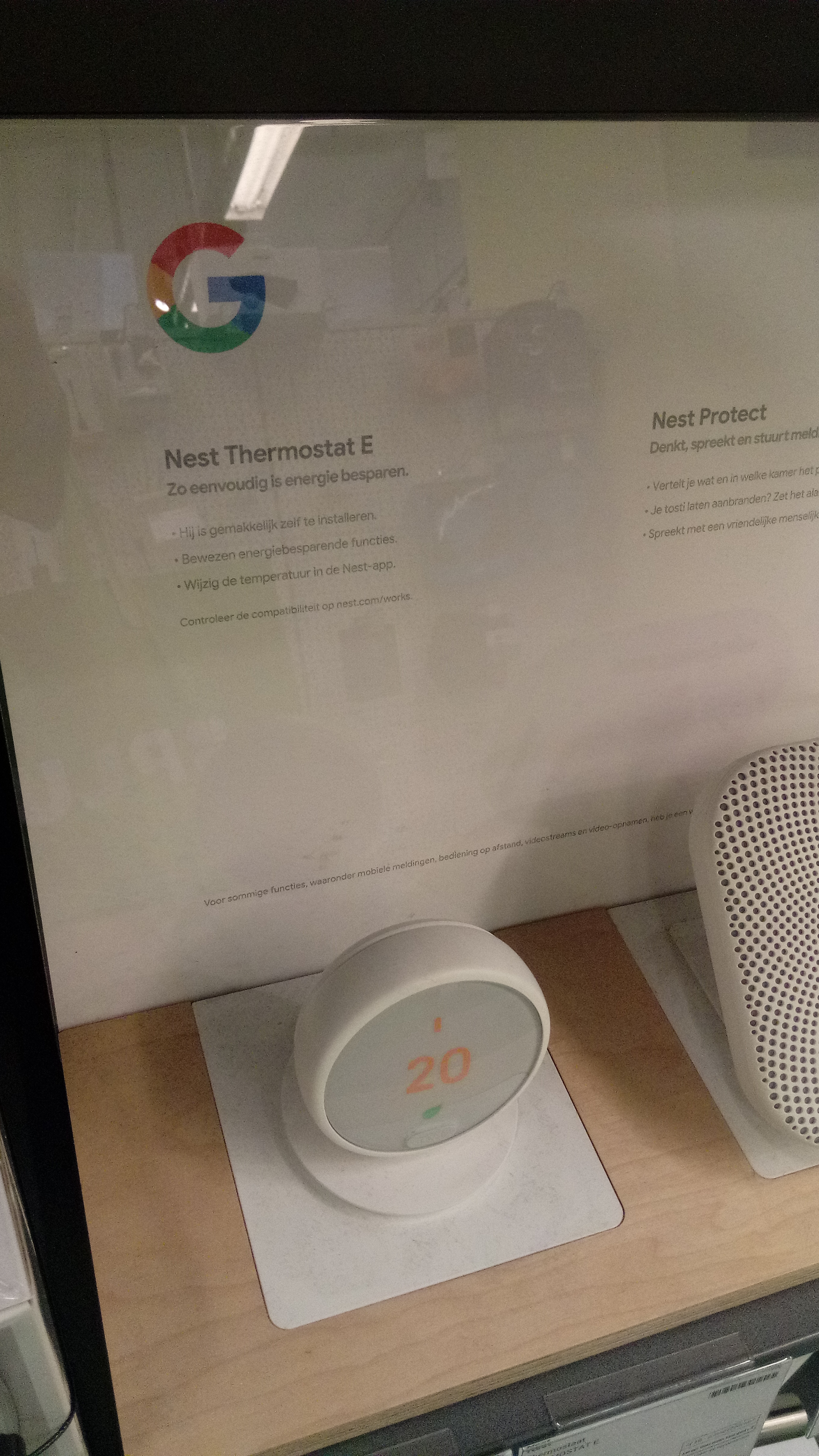
Homes with gas or electric furnaces and central ductwork use 24V low-voltage thermostats. Smart thermostats for this category include the Google Nest Learning Thermostat, Ecobee, and a range of less expensive alternatives. Ecobee thermostats in particular are popular in Canada due to the company's Canadian origin (Toronto) and their compatibility with the Canadian Rebate Finder program, through which some provincial utilities offered partial rebates on smart thermostat purchases.
A forced-air smart thermostat requires a minimum of 4 wires (R, G, Y, W for heat, fan, cooling, and heat — or some variation depending on system type) and ideally a C wire for constant low-voltage power. Many older Canadian homes have 2-wire or 3-wire thermostat wiring; adapters or power-stealing circuits exist but are not universally reliable.
Electric Baseboard Systems
For 240V baseboard heaters, dedicated line-voltage smart thermostats are required. These are wired directly into the circuit — again, requiring a licensed electrician under the Canadian Electrical Code — and replace the existing line-voltage thermostat. Brands selling line-voltage smart thermostats in Canada include Stelpro (a Quebec-based manufacturer) and King Electric. These devices support scheduling and, in some configurations, remote temperature monitoring, but they generally offer fewer automation features than their low-voltage counterparts.
Heat Pumps
Heat pump adoption in Canada accelerated between 2022 and 2026, driven partly by federal rebate programs under the Canada Greener Homes Grant (since transitioned into other programs) and partly by rising natural gas prices. Heat pump thermostats have more complex wiring requirements than standard forced-air, particularly for multi-stage and variable-speed systems. Not all consumer smart thermostats support heat pump control reliably; checking the wiring configuration against the manufacturer's compatibility checker before purchasing is essential.
What Connected Devices Record About Your Home
This is the part that receives less attention in product marketing. A connected thermostat collects, at minimum: temperature readings at regular intervals, setpoint changes (when you adjusted the temperature and to what), occupancy status (if it has a presence sensor), and heating/cooling runtime. Cloud-connected thermostats transmit this data to the manufacturer's servers, where it is stored, processed, and — in some cases — shared with third parties under the terms of the privacy policy.
Google Nest thermostats, for example, transmit usage patterns to Google's servers. Google's Nest privacy policy (as of 2026) states that Nest data "may be used to improve Google products and services" and may be shared with third-party partners in aggregate or pseudonymous form. This is not unusual among connected home manufacturers.
What Lighting Systems Record
Smart bulbs and smart switches record switching events (on/off transitions, dimming levels) and transmit these to the manufacturer's cloud if the hub relies on cloud connectivity. In aggregate, this generates a detailed record of occupancy patterns — when rooms are typically occupied, at what times, for how long. Over weeks, this data reveals routine schedules with reasonable accuracy.
Motion sensors add a finer layer: precise timestamps of room entry and exit. A system with motion sensors in multiple rooms can infer how many people are home, when they wake up, when they go to bed, and how much time is spent in each area of the house.
Canadian Privacy Law Context
The Personal Information Protection and Electronic Documents Act (PIPEDA) governs how private-sector organizations in Canada handle personal information, including data collected by connected home devices. PIPEDA requires that organizations: obtain meaningful consent before collecting personal information, identify the purposes for which data is collected, and allow individuals to access their personal data and challenge its accuracy.
In practice, PIPEDA consent requirements are typically satisfied through terms of service agreements — lengthy documents that most users do not read. The Office of the Privacy Commissioner of Canada (OPC) has published guidance on connected device privacy but does not proactively audit individual product lines. Canadian consumers who object to data collection by connected home devices can file a complaint with the OPC, though enforcement is limited against manufacturers based outside Canada.
Quebec's Law 25 (Act respecting the protection of personal information in the private sector), which came into full effect in 2023, imposes stricter requirements including mandatory privacy impact assessments for new technologies. Organizations offering connected home products to Quebec residents are subject to these additional requirements.
Local Control as a Privacy-Conscious Alternative
For users who prefer not to have their home activity data transmitted externally, local control platforms like Home Assistant provide an alternative. Home Assistant runs on a small computer (a Raspberry Pi, an Intel NUC-style mini PC, or a dedicated device like a Home Assistant Green or Yellow) and communicates with compatible devices entirely on the local network, with no cloud account required for core functionality.
Local control removes the privacy concerns associated with cloud-connected ecosystems, but it introduces a different set of requirements: the user is responsible for software updates, system stability, and configuration. It is not a plug-and-play experience. That said, the Home Assistant community is large and well-documented, and the platform has become substantially more accessible between 2020 and 2026.
For further information on privacy rights in Canada concerning connected devices, the Office of the Privacy Commissioner of Canada publishes public guidance and annual reports on privacy issues in emerging technology.
Summary: What to Consider Before Installing
- Verify your heating system type before purchasing a smart thermostat — forced-air, baseboard, and heat pump require different products
- Check whether a C wire or adapter is needed for your thermostat wiring
- Read the privacy policy of any device that requires a cloud account, specifically looking for data sharing and retention terms
- Consider whether local control (Home Assistant or similar) is a viable option for your technical comfort level
- Motion and occupancy data combined with lighting logs constitute a detailed record of household activity — treat it accordingly
- Electric baseboard heaters in Canada require line-voltage thermostats (240V), not standard low-voltage smart thermostats